
An Intuitive Approach to Abstract Art with Torsten Trantow
Updated: Apr 28
Uncertainty sits at the center of Torsten Trantow’s practice. Instead of resisting it, he moves through it, allowing each work to unfold without a predetermined outcome. His approach to abstract art is grounded in intuition, shaped by emotion, memory, and the moments that surface during creation. The work is felt before it is formed. Through gesture, color, and a sensitivity to what emerges on the surface, each composition grows from within, finding its direction over time. In our recent conversation, Torsten reflects on his background, his relationship to abstraction, and the role intuition plays in shaping his work.

Q: Let’s start with a fun icebreaker: If the lines and shapes in your compositions were cast in a movie, who would land the lead role and why.
A: That’s a wonderful question to start with, thank you so much. Maybe the best way to answer is to turn it into a scene: a love story beginning in spring, when the world softens and everything blooms. You walk through a park, not alone but beside someone you love. In my mind, lavender fields appear, like those in my work Abstract No. 57/24, stretching across Provence under warm, shimmering light. The air is thick with lavender, a quiet river winds through the landscape, the Mediterranean lies in the distance, and rugged mountains rise with raw honesty. It is in this space between gentleness and strength that my thoughts drift. The colors and lines of the painting become more than forms; they become paths inviting the viewer to wander, to sink into this love story, one each person continues to write in their own way with the people they cherish.
Q: Can you tell us a little about your background and how you came to be an artist.
A: I was born in 1975 in southern Germany, near the Swiss and French borders, in a landscape shaped by openness and contrast. Those mountains, meadows, and nearby cities became an early source of inspiration and still guide my work today. I drew constantly as a child, inventing stories and giving them form with pen and paint. Curiosity gradually turned into a clear desire to live in the art world. I trained as a graphic designer and worked for years as a freelance illustrator, publishing across books and media. Over time, though, I felt the need for something more open and unconstrained, which led me to abstract painting. That shift marked a new, intuitive, and deeply personal phase. Today, I live and work with my family in the same region that shaped me, and its influence continues to echo through everything I create.

Q: Your work starts from emotion but lands in abstraction. What helps you turn a feeling into paint.
A: My feelings often move between joy and sadness, an inner oscillation that sharpens my perception and gives depth to my work. I allow these emotions to exist freely, not as control, but as expression within the process. My gaze lingers on the overlooked, the quiet, fleeting moments in nature or the city. A leaf on water, a weathered surface marked by time, these subtle impressions carry a quiet intensity.
I collect them not as images, but as emotional traces. In the studio, they translate into color, contrast, and structure. I am drawn to the tension between surface and depth, chance and intention. Fields of color meet, shift, and merge, revealing processes of change over time. Each painting remains open, guided not by fixed composition, but by impulse. The work becomes a dialogue between intuition and material, where the aim is to make visible what cannot be spoken.
Q: You’ve said your work “grows from within itself.” What signals that a painting is starting to claim its own agency.
A: This question touches on something elusive, the quiet magic of painting. At the beginning, there is no fixed concept, only a feeling, an intuition of what I want to explore. In my current work, that is transience, not as an image, but as a trace within the surface. As the first layers emerge, the work begins to move beyond my control. Through accumulation, pauses, and shifts, a composition forms organically. This process requires patience and a willingness to let the painting unfold in its own time. There are moments of stillness where I simply observe, waiting, listening. In that space, a dialogue forms between the work and my perception. The painting becomes a counterpart, a place where thoughts and emotions resonate. Perhaps that is where its agency begins, in the openness of the process, where nothing is fixed except the willingness to engage.
Series Face No.14 | 50 x50 cm | Mixed Media | Acrylic | Tape on Canvas E/10 Series Espoir | 29 x 29 cm | Mixed Media, Acrylic, Tape on Canvas
Q: Your process feels like a dialogue between what you feel and what the painting wants. What cues you to lead that exchange or step back from it.
A: It begins with letting go, the decision to step away from fixed expectations and enter a space where the unknown becomes possibility. Each step carries risk, but also a willingness to continue despite uncertainty. What begins internally in flux finds its way onto the canvas through color, gesture, and structure. At the same time, I draw from my background in graphic design, a sensitivity to balance, composition, and tension. But this structure is not rigid, it exists as a counterpoint to freedom. Between control and intuition, a dynamic field emerges. For me, the essence of the process lies in this interplay. The rules are present, but they are constantly questioned and reshaped. When I fully surrender to the process, the painting shifts, it becomes a quiet companion, guiding me rather than being guided. The image is no longer constructed, but allowed to emerge.
Q: Fill in the blank: As both an artist and a person, uncertainty has taught me to ________.
A: … Trust in one’s own strength and belief in oneself. In the end, we see hope for good for ourselves and our fellow human beings.
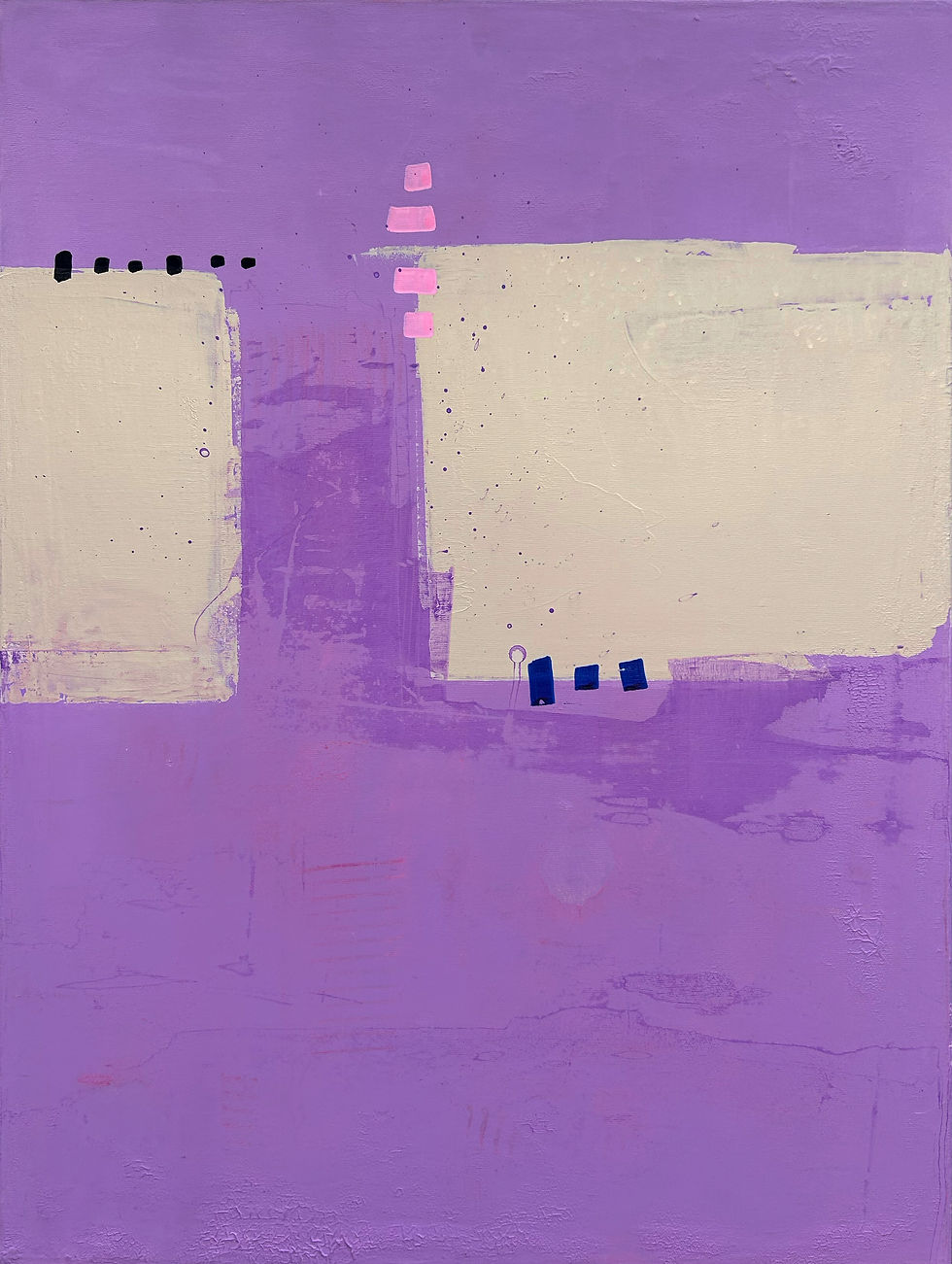
This conversation offers a thoughtful perspective on abstract art as both process and experience. Torsten Trantow’s work does not seek to define, but to remain open, allowing meaning to shift and settle over time. Through an intuitive and process-driven approach, his paintings move beyond composition. They exist as moments of quiet encounter, where emotion, material, and perception come into focus. Uncertainty remains central to this process, not as hesitation, but as a space where the work continues to unfold. In this way, abstraction becomes a way of navigating the inner world, where what is not fully known holds just as much presence as what is seen.

To see more of Torsten Trantow's incredible work and stay updated on his latest projects, be sure to follow him on Instagram and visit his website!
Disclaimer:
The views, opinions, and perspectives expressed by artists featured, interviewed, or presented on this site are solely those of the respective individuals. They do not necessarily reflect the views, beliefs, or opinions of Selfless Art Gallery, its staff, or affiliates.


Comments